Blog Archive

Showing posts with label nature. Show all posts

Monday, June 18, 2012

Nature Spotting with Google Maps


iSpot is a website aimed at helping anyone identify anything in nature.

Users can add observations of animals or plants they have spotted to the iSpot website and if necessary request help in identification. Observations added to iSpot can include a photograph and/or a description of the observation.

The iSpot Observations Map allows users to browse the submitted observations by location, taxonomy and by habitat.

Tuesday, January 10, 2012

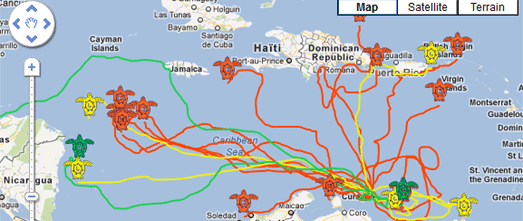
Tracking Turtles with Google Maps


Sea Turtle Conservation, on the the Caribbean island of Bonaire, have been tracking turtles since 2003. The Previously Tracked Turtles Map shows the tracks of the 21 adult turtles that have been tracked since the programme began.

This year Sea Turtle Conservation Bonaire have developed the Great Migration Game to follow the movements of one turtle, called Jklynn. School students in Bonaire can predict where the sea turtle will end up and win some great prizes if they guess correctly.

You can see Jklynn's current position on this Jklynn Google Map.

Via: Google LatLong

Tuesday, October 18, 2011

America's Wildlife on Google Maps


The National Wildlife Foundation's Nature and Event Finder is a great Google Map of the U.S.'s National and State Parks, Wildlife Areas, National Forests and much more.

Users can search for their nearest wildlife points of interest and events by location and even define the radius they wish to search within. The advanced search options allow users to search the map by category or by type of event.

If you click on a map marker you can view a review of the wildlife event or point of interest selected and view information such as the address, driving directions and site's web address.

_________________

Thursday, April 29, 2010

Finding Wildlife with Google Maps

National Wildlife Federation: Nature Find

The National Wildlife Federation is using Google Maps to help users find information about outdoor areas, nature parks and events.

The map is one of the most visited pages on the NWF website and it is easy to see why. Nature Find features a very impressive search feature. It is possible to search for outdoor areas or nature events by location, you can set a proximity range to only view events / locations within a certain distance and you can can select to view results from within a very large range of events and site types.

The results of a search are then displayed on a Google Map using categorised map markers, so that you can tell at a glance what type of event / outdoor area each represents. Click on any of the map markers and you will get detailed information and photogrpahs about the location or event

Via: Mashable

________________

Friday, March 19, 2010

Birds on Google Maps

Burdr

If you liked the Street View image of a seagull in today's Friday Fun post then you are going to love this collection of Street Views by the Burdr website.

Burdr have obviously spent a few hours putting together this small collection of ostrich, geese and pigeons that can be found in Google Maps Street View.

Safari Map

If bird spotting is your thing then there are also a couple of good satellite images, from Google Maps of birds in this collection of Google Maps super close-up satellite imagery.

The collection also includes, elephants, seals (pictured), camel, antelope and many more.

Other Birdwatching Maps
_____________

Wednesday, January 13, 2010

Wild Animals on Google Maps

WildlifeNearYou

Have you ever wondered where your nearest zoo is? Or maybe you want to know where you can go to see some llamas.

WildlifeNearYou is a new website (it launched yesterday) that allows nature lovers to share information and photographs about zoos, nature reserves and other wildlife locations.

The site features a simple search engine that allows you to search for locations for specific animals. For example, search for 'llamas near Brighton' and WildlifeNearYou will tell you the nearest places to Brighton that you can go to see some llamas.

The site uses Google Maps to show the location of each zoo or nature reserves etc. Each page is illustrated with user photographs of the animals or photographs imported from Flickr alongside the address and other details of each establishment.

Via: Mapperz
________________

Popular Posts